


A Comprehensive Analysis of the Sea Freight Process from China to Australia and Which Ports Offer Higher Customs Clearance Efficiency
For importers looking to ship goods from China to Australia, understanding the sea freight process is key to ensuring timely, cost-effective, and smooth logistics planning. As professional freight forwarders, we will provide a detailed breakdown of the entire shipping process and highlight the customs clearance efficiency at various Australian ports to help you optimize your supply chain.
Understanding Sea Freight
Sea freight is one of the most cost-effective ways to ship bulk cargo over long distances. It uses container ships to transport a wide variety of products, from raw materials to finished goods. For Australian importers, shipping from China is particularly popular due to its geographical proximity and numerous shipping routes.
Key Advantages of Sea Freight
1. Cost-effectiveness: Sea freight is generally cheaper than air freight, especially for bulk cargo transportation.
2. Capacity: Container ships can transport large volumes of cargo, making them ideal for importers with high logistics demands.
3. Environmental Impact: Ocean freight has lower carbon emissions compared to air freight.


Overview of the China to Australia Sea Shipping Process
Step 1: Preparation & Booking
- Product classification: Determine the correct HS code for your goods, as this affects duties, taxes, and import regulations.
- Select incoterm: Clearly define responsibilities (e.g., FOB, CIF, EXW) with your supplier.
- Book shipping space: Work with a freight forwarder to secure container space (FCL or LCL) on vessels sailing from Chinese ports to Australia. For normal periods, confirm shipping schedules and shipping company with the freight forwarder 1 to 2 weeks in advance; for peak seasons such as Christmas, Black Friday, or before Chinese New Year, plan even earlier. For LCL (Less than Container Load) shipments, deliver to the freight forwarder's designated warehouse; for FCL (Full Container Load) shipments, the freight forwarder will arrange trucking to the designated location for loading.
Step 2: Export Customs Clearance in China
- Your supplier or forwarder handles export declarations.
- Required documents typically include:
- Commercial Invoice
- Packing List
- Bill of Lading
- Certificate of Origin (if applicable)
- Fumigation Certificate (If the goods contain wooden packaging, fumigation treatment must be completed in advance, and relevant certificates must be prepared to avoid subsequent customs clearance obstacles.)
- Goods are transported to the port of loading (e.g., Shanghai, Ningbo, Shenzhen).
Step 3: Ocean Freight & Transit
- Main Chinese ports: Shanghai, Ningbo, Shenzhen, Qingdao, Tianjin, Xiamen, etc.
- Main Australian ports: Sydney, Melbourne, Brisbane, Fremantle, Adelaide.
- Transit time:
- East Coast Australia (Sydney, Melbourne): 14 to 22 days
- West Coast (Fremantle): 10 to 18 days
- Vessels typically pass through major transshipment hubs like Singapore or Port Klang.
During this stage, the cargo status can be tracked in real time through the shipping company's cargo tracking system.
Step 4: Pre-Arrival Documentation & Australian Requirements
- Australian Customs Declaration: Submitted via the Integrated Cargo System (ICS) before arrival.
- Department of Agriculture, Water and Environment (DAWE): Many goods require inspection or treatment for biosecurity.
- Other Certificates: Depending on goods (e.g., electrical, toys), additional approvals may be needed.
Step 5: Port Operations & Customs Clearance in Australia
After the goods arrive at the port, they enter the customs clearance process. The freight forwarder or customs broker will assist in submitting documents such as the bill of lading, invoice, and fumigation certificate to Australian customs. Then, customs duties and approximately 10% Goods and Services Tax (GST) will be paid according to the type of goods. Some eligible goods may enjoy tax exemption.
- If cleared, containers are released for pickup.
- If inspections are required, delays and extra costs may apply.
Step 6: Transport to Final Destination
- Containers are moved by truck or rail from the port to your warehouse, or you could arrange trucks to pick up the goods at the port.
- Empty containers are returned to designated depots.
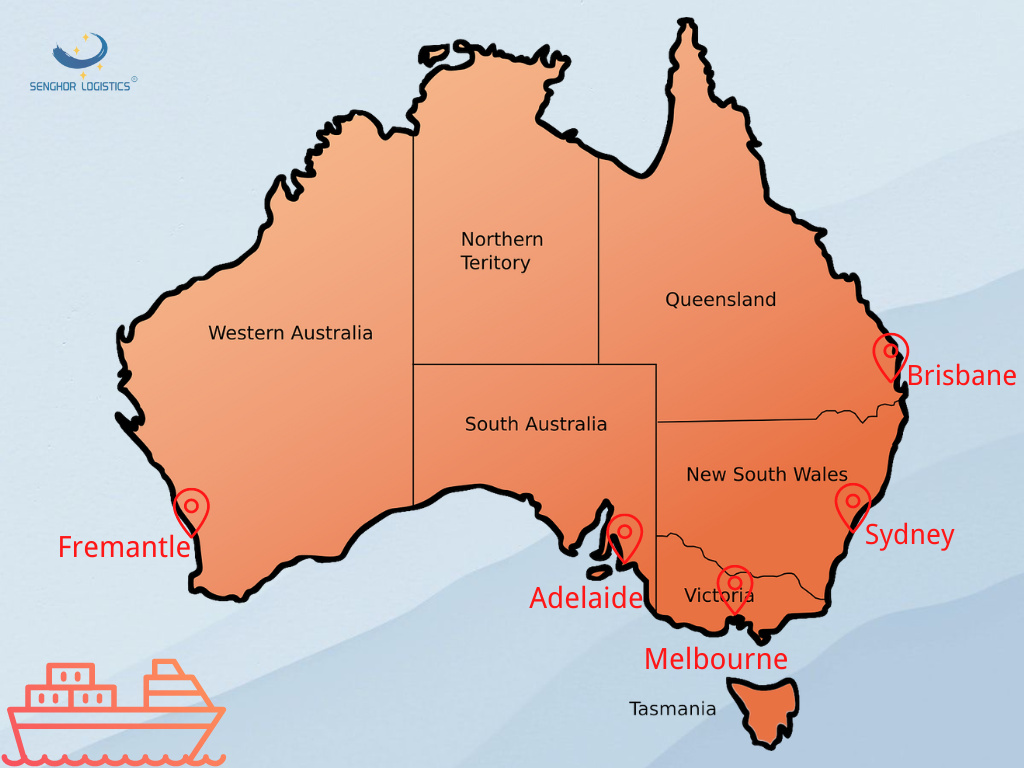
Analysis of Australian Port Customs Clearance Efficiency
Melbourne Port:
Pros: As Australia's largest and busiest container port, handling approximately 38% of the country's waterway container traffic, it boasts a dense network of shipping routes and well-developed port infrastructure. It not only has dedicated terminals for various types of cargo but also leverages a mature customs clearance cooperation system, coupled with local professional customs clearance teams, to efficiently handle a wide range of goods, including machinery, auto parts, and building materials, making it the preferred port for industrial cargo clearance.
Cons: Occasional labor shortages or weather-related delays.
Best for: General cargo, manufacturing imports, southeastern Australia distribution.
Sydney Port (Port Botany):
Pros: As a major natural deep-water port and the leading port in terms of cargo volume in Australia, its customs clearance advantages lie in its high level of digitalization and diverse clearance channels. The port is connected to the Australian Customs pre-clearance system, allowing cargo data to be submitted 72 hours in advance through the ICS system, reducing terminal waiting time by 60%. For personal items valued at ≤ AUD 1000, a simplified clearance procedure is available, with processing completed in an average of 1 to 3 business days. After declaration, routine cargo undergoes electronic approval and random inspections, and clearance is generally completed within 3 to 7 working days. 85% of routine cargo is released within 5 working days, catering to the rapid clearance needs of e-commerce goods such as consumer goods and furniture.
Cons: Can experience congestion, especially during peak seasons.
Best for: High-volume imports, consumer goods, tight supply chains.
Brisbane Port:
Pros: As Queensland's largest container port, it boasts 29 operating berths with high loading and unloading efficiency. It also has dedicated terminals for various types of cargo, including bulk cargo and roll-on/roll-off (Ro-Ro), capable of handling clearance and transshipment of goods such as home appliances, building materials, and hardware tools. Its clearance process is suitable for both bulk and general cargo transportation needs, with stable overall clearance times and minimal long backlogs, making it suitable for goods destined for Queensland and surrounding areas.
Cons: Smaller capacity, may have fewer direct shipping lines.
Best for: Importers in Queensland and northern NSW.
Fremantle Port (Perth):
Pros: Fast clearance for non-restricted goods, less congestion, efficient for WA-bound cargo.
Cons: Longer transit time from China, fewer weekly sailings.
Best for: Mining equipment, agricultural imports, WA-focused businesses.
Adelaide & Others
Smaller ports may have slower clearance due to less frequent staffing and fewer integrated systems.
Can be efficient for specific, low-risk cargo with pre-prepared documentation.

Tips to Speed Up Customs Clearance at Any Port
1. Document Accuracy: Ensure all documents are completely consistent.
2. Use Licensed Customs Brokers: They understand Australian regulations and can submit documents in advance.
3. Comply with Biosecurity Regulations: Handle timber, packaging, and organic materials properly.
4. Advance Clearance: Submit documents as early as possible through the ICS (Independent Customs Service) system.
5. Advance Preparation: If feasible, prepare goods in advance during peak seasons and consult with freight forwarders and book space ahead of time.
Senghor Logistics has over 10 years of experience in international logistics, and the China to Australia shipping route has consistently been one of our main service routes. With years of experience, we have also accumulated a number of loyal Australian clients who have been working with us ever since. We provide ocean freight services from major Chinese ports to Australia, including customs clearance and door-to-door delivery, ensuring a smooth and cost-effective transportation process.
To learn how we can assist you with your import logistics needs, please contact us today.
Post time: Dec-19-2025


