



What are the common international air freight routes from China to Europe?
Europe is one of the world's most demanding import markets: fast delivery, stringent product compliance requirements, and customs regulations that change once goods cross borders. For importers sourcing from China, air freight is not just a shipping decision, but also a compliance and cash flow decision. For over a decade, Senghor Logistics has been engaged in freight shipping from China to Europe. We will show you the essentials of air freight routes and customs regulations from China to Europe.
The three main shipping routes into Europe
1. Direct trunk routes — speed and stable capacity.
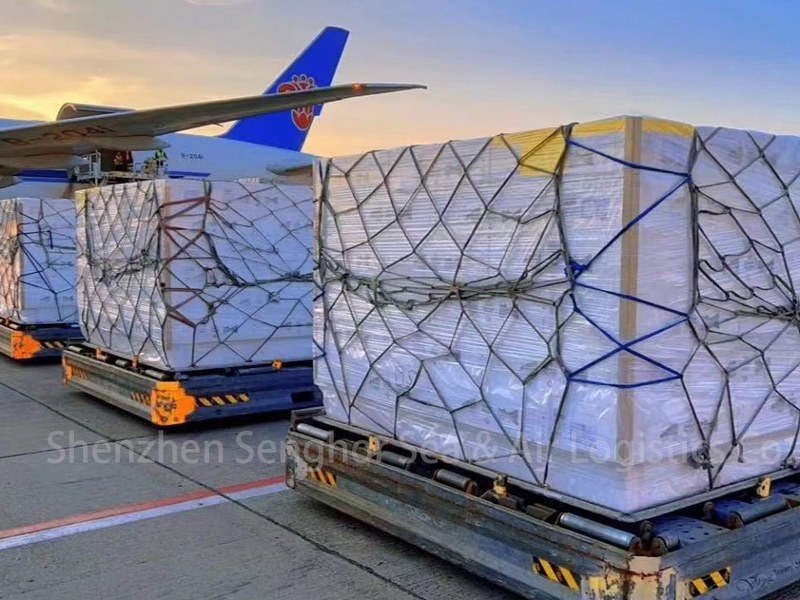
Direct flights are the first choice for importers prioritizing timeliness. The mainstream destinations are Frankfurt (FRA), Paris Charles de Gaulle (CDG), London Heathrow (LHR), Amsterdam (AMS) and Liège (LGG). Expect 2–4 days airport-to-airport and reliable space. Amsterdam and Liège are the two most important e-commerce clearance and onward-distribution hubs on the continent: a large share of China-origin air cargo lands there, clears customs, and is then distributed across the EU.
2. Hub-transit routes — cost efficiency for volume.
Services routed via Istanbul or Dubai carry a lower freight rate but stretch transit to 4–7 days. Choose these for price-sensitive, larger general-cargo shipments where delivery dates are firm but not tight.
3. Central & Eastern Europe (CEE) — plan for a second leg.
Direct flights to Poland, Czechia and Hungary are limited, so most CEE-bound cargo transits through a Western hub. A few dedicated lines land directly at Warsaw or Budapest for local clearance. Critically, inspection practice in CEE differs from Western Europe, with a higher share of manual document review, stricter requirements for translated paperwork and certificates of origin, and extra import licences on certain categories. Do not assume a route that works for Germany works identically for Poland.
Customs clearance: the EU is one union, not one rulebook
Many importers mistakenly believe that the EU's unified customs code means all clearance standards are identical, but the reality is quite different. While EORI and VAT are universally accepted within the EU, and CE certification is required for electronic products and toys, the implementation standards and additional regulations vary from country to country.
Germany — the toughest scrutiny. HS codes and declared product descriptions must be precise and cannot be vague. EPR registration (packaging, batteries and WEEE) is mandatory, and a missing registration is one of the most frequent causes of detained cargo. Inspection rates are high.
France — the MRN (Movement Reference Number) must be on file, and textiles require French-language labels. Documentation is heavier than most markets.
Spain & Portugal — relatively relaxed checks and fast parcel release, but last-mile delivery to outlying regions is less predictable.
Your EORI number is the gate. Every commercial import into the EU needs a valid, correctly declared EORI — without it, the entry declaration cannot be lodged and goods are blocked. VAT is charged at import and generally must be settled before release.
After Brexit: treat the UK as a separate customs system
Since Brexit, the UK has become independent of the EU customs system, using its own GB EORI and CDS declaration systems. It cannot use EU tax codes.
Product compliance before the cargo ships: CE, EPR and labels
Clearance starts before pickup. Electronics and toys need CE marking; the categories that most often trigger holds are missing CE, unregistered EPR and under-declared value. As an importer you are legally a "producer" under EPR — meaning you carry the registration, reporting and recycling-fee obligations in each country where you place goods on the market, and EPR numbers are country-specific and not interchangeable.

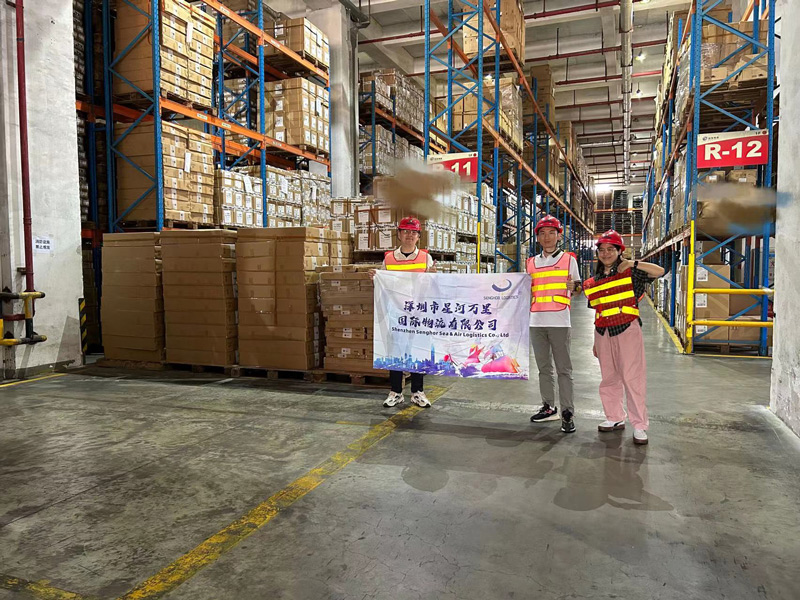
Senghor Logistics operates major air freight routes from China to Europe—direct trunk lines to Frankfurt, Amsterdam, and London, cost-effective hub-and-spoke solutions, and dedicated customs clearance services—providing importers with end-to-end support: route selection, document pre-screening, EORI/VAT/IOSS and CE/EPR compliance checks, UK/EU channel separation, and subsequent distribution in Europe. Before you book, pre-screen your shipments with our freight consultants and make air freight a predictable and profitable part of your supply chain.
Post time: Nov-13-2026


