


What are the main sea freight shipping routes from China to the United States?
The main sea freight shipping routes from China to the United States are direct shipping to the US West Coast, the Panama Canal route to the US East Coast, and sea-rail intermodal transport to the US East Coast. The Suez Canal route serves as a special supplement, covering different timelines, costs, and destination requirements.
1. Trans-Pacific routes
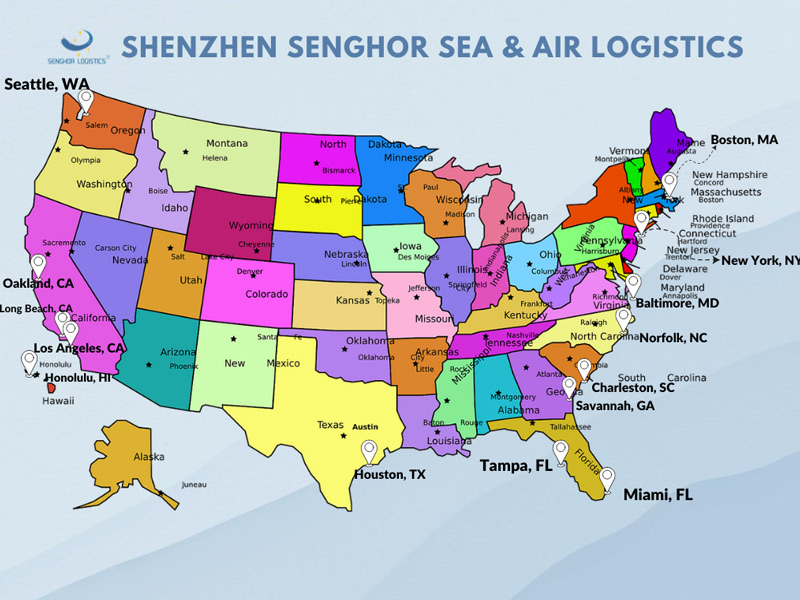
The most common shipping route from China to the United States is the trans-Pacific route. This route connects major Chinese ports, such as Shanghai, Shenzhen, and Ningbo, with major U.S. ports, including Los Angeles, Long Beach, Oakland, and Seattle.
Key Features:
Distance: Approximately 5,000 to 7,000 miles, depending on the ports involved.
Shipping Time: Typically 12 to 22 days, depending on the shipping company and route. Matson is the fastest company, with a transit time of approximately 12 to 15 days.
Note:
Port Congestion: Major US ports, especially Los Angeles and Long Beach, frequently experience congestion, which may lead to delays. Importers should consider potential delays when planning import freight.
Seasonal demand: Peak seasons such as holidays and shopping seasons can affect delivery times and costs. Importers should plan ahead during peak seasons and work closely with freight forwarders to avoid unexpected problems that could impact delivery dates.
2. China to the US East Coast (via Panama Canal)
Path (All-Water Route): China → Pacific → Panama Canal → Atlantic → East Coast ports.
Ports: New York, Baltimore, Norfolk, Savannah, Houston, Charleston, etc.
Transit Time: 25 to 40 days, depending on canal congestion, weather conditions, and port pairs. For example: Shanghai to New York: 28-35 days; Shenzhen to Savannah: 30-38 days; Qingdao to Houston: 30-40 days.
This route is suitable for:
Your final destination is located in the Eastern United States;
You want to avoid the inland rail/road transportation costs from the West Coast.
3. Landbridge Route (West Coast + Rail)
While not a purely sea freight route, Mini Landbridges (MLBs) are very common. Goods arrive at West Coast ports (Los Angeles/Long Beach, Seattle, Oakland) and are immediately loaded onto trains for inland rail transport to destinations such as Chicago, Dallas, Memphis, Denver, Salt Lake City, and even New York.
Total transit time: Approximately 23 to 30 days (including sea and rail transport)
Why choose this route?
Faster than all-water transport to the East Coast (approximately 7 to 10 days faster)
More economical than the Panama Canal route for many Midwestern destinations
Reliable rail network (BNSF, UP) provides frequent services
This is often the optimal balance between speed and cost for goods destined inland or to the East Coast.
4. Suez Canal Route (China to US East Coast)
The Suez Canal route is a long-haul shipping route to the US East Coast, primarily used for Ultra Large Container Vessels (ULCVs) or special cargo that cannot transit the Panama Canal. While niche, this route is crucial for meeting specific shipping needs.
Route Overview: Ships depart from China, sail westward through the South China Sea, pass through the Strait of Malacca, cross the Indian Ocean, enter the Red Sea, pass through the Suez Canal, sail through the Mediterranean Sea, cross the Atlantic Ocean, and finally arrive at ports on the east coast of the United States. This route is one of the longest sea routes in the world, approximately 11,000 to 13,000 nautical miles long.
Shipping Time: The longest of all major routes, FCL typically takes 35 to 45 days, LCL takes even longer due to consolidation and transshipment.
Advantages:
Accommodates ULCVs with a capacity of up to 250,000 tons, leveraging economies of scale to reduce per-unit shipping costs for large-volume shipments. A reliable alternative when the Panama Canal is fully booked or congested, especially during peak trade seasons.
Disadvantages:
Longest transit time, not suitable for time-sensitive goods. Higher overall costs due to longer distance, fuel surcharges, and Suez Canal tolls. More handling points (e.g., transshipment in European ports), increasing the risk of delays or damage.
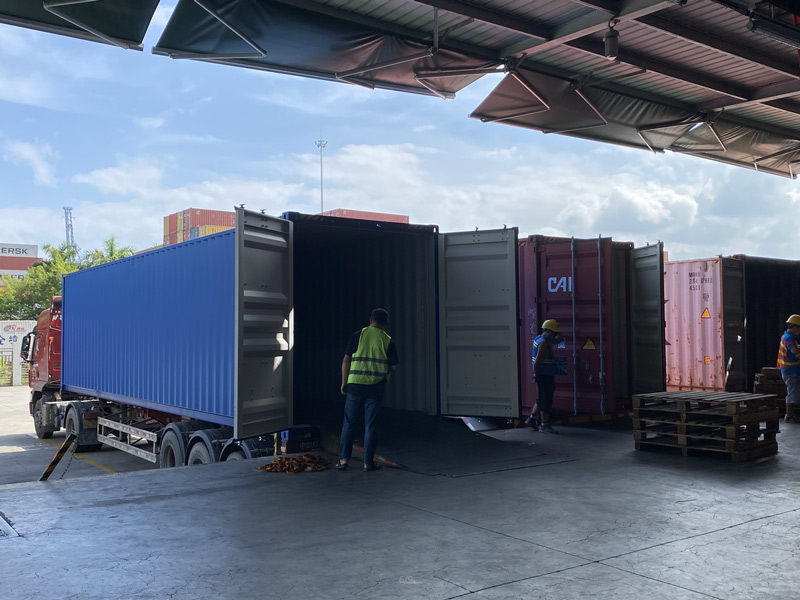
If you plan to import goods from China to the United States, the shipping route will impact your costs and delivery efficiency. Our team provides customized logistics solutions to ensure your goods cross the Pacific Ocean efficiently and safely. Feel free to contact us.
Post time: Apr-13-2026


