



Let me tell you a real-life example why consolidated shipping can save importers money on freight costs
Those in the import business, especially small and medium-sized importers sourcing from China, often face a very real problem: ordering from 3 to 4 different suppliers, each with a small order volume. Shipping separately incurs separate freight, documentation, and handling fees for each shipment; shipping together, however, leaves them unsure where to begin.
Whenever a client asks me, "I have several suppliers' orders to ship; should I ship them separately or together?", I always advise them to use consolidated shipping. This isn't because I want to earn extra handling fees, but because I've personally witnessed too many clients paying unnecessary freight costs due to fragmented shipping.
Today, I'll use a real-life case I handled to illustrate this. Let's see what consolidated shipping can actually save clients, what challenges might arise during the process, and how I handled it.
Basic Situation:
The client was an importer in Fiji, specializing in smart door locks. This procurement involved goods from multiple suppliers, including complete door lock units and various small accessories. All goods needed to be gathered at our office before being consolidated into a single shipment to avoid increasing shipping costs by splitting shipments.
While this sounds like a routine consolidation request, there were several unique aspects to its execution:
First, the goods contained built-in batteries. Most door lock products include batteries, requiring a thorough understanding of channel rules and confirmation of any necessary additional documentation.
Second, the suppliers were located in different places, and each shipment had different arrival times, necessitating individual tracking of each package to ensure nothing was missed.
Third, the goods were numerous and varied, including large complete units and loose small accessories. Simple cardboard box packaging could result in loose packaging and excessive volume, affecting the final shipping cost.

When the cargo arrived at the office
The first thing we did was consolidate packaging to save the client on shipping costs:
When we received shipments from multiple suppliers, small accessories were often packed in separate small boxes, resulting in excessive internal filler and inefficient space utilization.
What we did was simple: we took all the loose, small items out, packed them into the outer boxes of the larger shipments, and rearranged them. Goods that might have originally occupied 1.5 cubic meters were reduced to about 1.2 cubic meters through proper arrangement. This saves the client money in freight calculations.
Not every freight forwarder proactively does this. Some simply stack the goods together in their original boxes upon receipt, but that incurs additional volumetric weight freight charges for the client. By spending a little more time organizing, we saved the client a real amount of money.

The cargo after consolidation
The second issue we encountered: Goods containing built-in batteries require prior confirmation of channel rules.
Body-bearing goods are often overlooked during transport. Some people only think to inquire after the goods arrive at the warehouse, only to find that the documents are incomplete and the shipment cannot be released.
I verified the channel rules in advance. For civilian-use door locks with built-in batteries, no MSDS or Certification for Transport of Goods is required; basic documents are sufficient for customs clearance. Customers don't need to prepare a bunch of extra documents or worry about incomplete documentation leading to cargo seizure.
The third issue encountered: The client forgot to order a shipment of accessories, causing the goods to remain in the warehouse for nearly two weeks.
This was the biggest setback in the entire process. I repeatedly confirmed with the client that all the items were complete, and he consistently assured me they were. Only after all the goods were in the warehouse did he inform me that one shipment had not been delivered and that shipment would have to wait until all the accessories were complete.
So, the goods remained in the warehouse for nearly two weeks. Storage fees would normally be incurred, but considering the client was a long-term client and had repeatedly confirmed that all items were complete before arranging shipment, I applied to our company for a reduction in storage fees during the retention period. Simultaneously, I updated the client daily on the receiving and processing progress, assuring him that the goods were being tracked and would not encounter any problems.
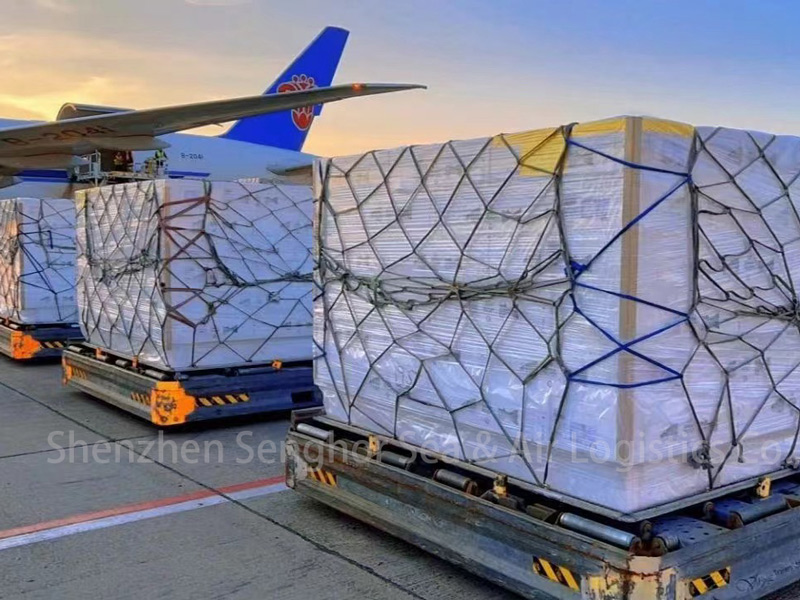
The final result: After all the goods were collected, a door-to-door air freight shipment from China to Fiji was arranged, successfully dispatched on July 9th, and delivered on time on July 14th.
The client's feedback was: patient service, transparent pricing, no hidden fees, familiarity with the regulations for exporting goods containing batteries, and proactive updates on the progress each time. What I found most valuable in this review were the "transparent pricing" and "no hidden fees." As a freight forwarder, the overall freight rate quoted is the final price; no extra charges are added midway through the process, which builds customer trust.
Welcome to send your inquiry: sales09@senghorlogistics.com

So, what can we learn from this case?
First, consolidation services have a long cycle, from initial coordination in early June to shipment in early July, nearly a month. During this time, it's necessary to continuously track each supplier's goods to ensure they've arrived, been organized, and are complete. This tests not just shipping capacity, but patience and meticulousness.
Second, small actions like consolidation and packing can save customers real money on shipping. Stuffing small, loose items into larger boxes and reorganizing them takes little time, but can reduce the customer's shipping costs by tens of percent. Customers appreciate this tangible service.
Third, appropriate flexibility in handling special circumstances can leave a lasting impression on customers. While charging storage fees according to regulations is reasonable, the trust gained from reducing storage fees in cases of genuine customer difficulties is far more valuable than the small fee itself.
Fourth, customer cooperation is also crucial. The client's attitude was also crucial to the successful completion of this shipment. Smooth communication, timely information delivery, and seamless two-way cooperation are essential for efficiently handling complex consolidation orders.
Therefore, if you ask me when you should consider consolidation shipping:
- When you are simultaneously sourcing from 2 to 5 different Chinese suppliers, with relatively small volumes from each supplier, but all goods are ultimately destined for the same destination, consolidation shipping is worth considering.
- When your current suppliers are located in different cities (e.g., Shenzhen, Ningbo, Xiamen), and the volume from each supplier is insufficient for a single shipment, consolidation shipping can save you from multiple minimum charge rates.
- When you don't want to monitor the progress of several shipments yourself or handle multiple sets of customs documents, consolidation shipping allows you to deal with only one freight forwarder, handle one set of documents, and pay one freight cost.
If you are sourcing from multiple Chinese suppliers but are unsure how to consolidate your shipments into one, you can send me the supplier's city and approximate volume, and I will help you determine if consolidation shipping is suitable. You don't need to finalize a plan first; let's understand the situation first.
Click to send email: sales09@senghorlogistics.com
Author: Vilien Wu, Salesperson of Shenzhen Senghor Sea & Air Logistics Co., Ltd. Deeply involved in traditional sea freight and air freight door-to-door services in markets such as Europe, the United States, Canada, and Australia, with extensive practical experience in consolidation and transportation of goods, and integrated shipments from multiple suppliers.
Author said: Since entering the industry, I have worked with many small and medium-sized importers and found that many importers have only a superficial understanding of logistics, and their experience is mostly learned from mistakes. Therefore, I decided to share some real-world shipping cases and logistics knowledge to help more importers avoid pitfalls in the shipping process.
Whether a shipment can be shipped smoothly depends on the freight forwarder's control and predictive ability at each stage. Choosing a reliable freight forwarder is important, but as an importer, having some logistics knowledge yourself is crucial for better judgment and selection.
Welcome to contact me anytime if you have shipping needs or logistics questions.

Post time: Aug-18-2026


