



Why are air cargo backlogs common during international air freight peak season?
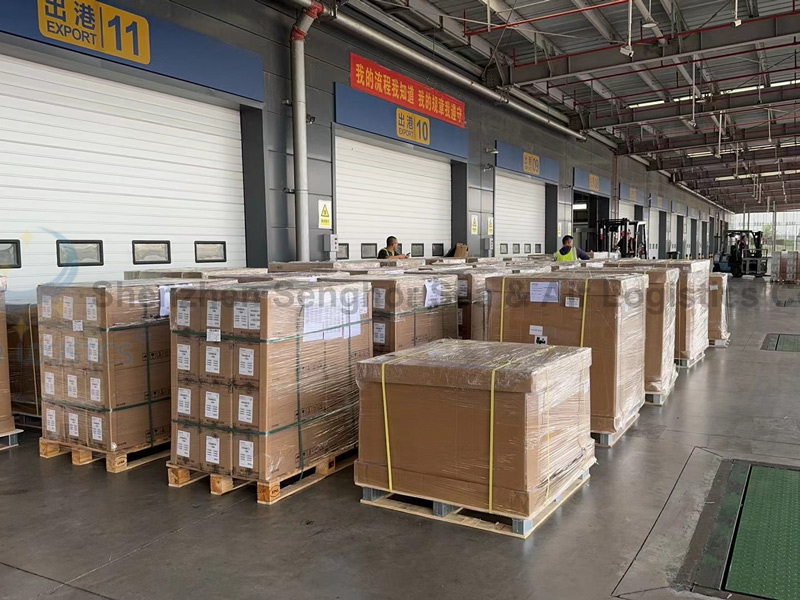
As a freight forwarder, one of the most common frustrations we hear from importers during peak season is: “Why is my cargo still sitting at the origin airport?” This experience is what the logistics industry often calls a “warehouse backlog”. It means your goods have been handed over to the airline’s warehouse but cannot be uplifted immediately due to a lack of available flight capacity. Instead, they wait in a queue that can stretch anywhere from a couple of days to over a week.
From August to December, warehouse backlogs have become an unavoidable pain point in the industry, covering peak periods such as pre-Black Friday promotions, Christmas holiday inventory backlogs, back-to-school season, and year-end global order surges.
Next, our professional freight forwarding team will delve into the root causes of air freight backlogs.
1. Imbalance between Freight Demand and Airline Capacity (Main Reason)
Unlike shipping companies, which can temporarily add vessels during peak periods, the cabin space and flight schedules of commercial passenger aircraft and dedicated freighters are relatively fixed. Airlines cannot significantly increase flights or expand cargo capacity in a short period to cope with sudden surges in freight volume.
Every year, starting from the end of the third quarter, global importers accelerate pre-holiday restocking in preparation for "Black Friday," "Cyber Monday," and Christmas promotions. At the same time, many brands divert urgent cargo from congested sea freight to air freight to avoid port delays. This dual demand results in a 40%-60% year-on-year increase in air freight volume on major routes.
When the volume of cargo received by airport inbound warehouses far exceeds the daily available flight space, inbound goods have to be temporarily stored in airport bonded warehouses. Goods are shipped on a first-come, first-served basis, directly causing large-scale cargo backlogs. The queuing pressure is most severe on popular routes such as those between China to the US, China to Europe, and China to Southeast Asia.
2. Transshipment Hub Congestion
Congestion at major transit hub airports further exacerbates the backlog problem. During peak season, cargo flows are highly concentrated at major airports in mainland China (Shanghai, Shenzhen, Guangzhou, etc.) and international transit hubs such as Hong Kong, Singapore, and Incheon. Cargo terminal sorting, security checks, palletizing, and loading/unloading capabilities are nearing saturation, significantly slowing cargo turnover after warehousing. If upstream flights are delayed, transit connections are disrupted, causing cargo to be held up again at transit airports, further increasing warehousing backlogs.
In addition, limited storage space at transit hub warehouses, with peak season cargo volumes far exceeding the designed storage capacity of airport warehouses; and shortages of personnel and forklifts and handling equipment during peak periods, all contribute to slowing down overall cargo handling speeds and causing backlogs in the upstream warehouse storage chain.
3. Stricter Customs Inspection & Documentation Audit in Peak Seasons
To prevent smuggling, counterfeit goods and abnormal trade declarations amid surging cargo volumes, customs authorities worldwide will raise inspection rates and tighten document reviews automatically during air freight peak seasons.
Shipments with minor document errors (incorrect commodity HS code, inconsistent packing list and commercial invoice, missing origin certificates) will be detained directly in airport warehouses for supplementary declaration or manual inspection. These detained shipments occupy valuable warehouse space continuously, slowing down the circulation of normal cargo and aggravating overall warehouse backlogs.
For importers, incomplete shipping documents are one of the most avoidable causes of personal cargo delays amid public warehouse congestion.
4. The “Rolling Cargo” Phenomenon
Airlines commonly overbook cargo space to reduce empty cargo losses. However, during peak seasons, shippers rarely cancel orders. When cargo planes arrive, if the actual cargo hold is more loaded than expected, lower-priority cargo is "rolled over" to the next flight—and then the one after that. Large, heavy, or oddly shaped cargo is particularly vulnerable because it is more difficult to fit into the remaining space in the aircraft cargo hold. Each time cargo is "rolled over," it remains in the warehouse, occupying space and delaying the transport of new cargo. This creates a snowball effect, potentially taking weeks to clear completely.
5. Other Factors
Weather and operational disruption: Peak seasons often coincide with adverse weather events (e.g., typhoons, winter storms) that disrupt flights and ground logistics. Additionally, equipment failures or IT system glitches at warehouses can cascade into widespread delays.
Bullwhip effect in supply chains: Fluctuating demand forecasts lead to overbooking by importers, who anticipate shortages. This artificial surge in bookings strains carriers and warehouses, creating a ripple effect of backlogs as each link in the chain reacts to perceived shortages.


How Air Cargo Backlogs Affect Importers
Longer transit times: An air shipment that normally requires 5-7 days for door-to-door delivery may take 8-12 days or longer during severe congestion.
Higher logistics costs: For example, storage fees, demurrage fees, etc.
Impact on sales: You may face retail shelf gaps, production line stoppages, or missing the narrow window of a seasonal sales campaign.
Strategies to Alleviate Cargo Backlogs
As an importer, you can implement the following strategies to mitigate the impact of air cargo backlogs during peak season:
1. Plan ahead: Estimate peak season demand and arrange shipments accordingly. Consider placing orders in advance to avoid peak periods.
2. Prepare all customs documents perfectly in advance: Double-check commercial invoices, packing lists, import permits and HS codes before cargo departure. This reduces communication costs and avoids the risk of customs detention.
3. Adopt three-track logistics solutions: bulk, low-time-sensitivity goods are shipped by sea; high-value, time-sensitive goods are shipped only by air; and European importers can choose rail transport as appropriate, balancing logistics costs and supply chain stability.
4. Partnering with freight forwarders with fixed capacity. Don't rely solely on spot market prices; instead, partner with freight forwarders who hold space on key shipping routes. This will significantly reduce the risk of cargo delays.
Senghor Logistics arranges weekly charter flights from China to the US, UK, and Germany, and has fixed flight spaces from China to Canada, Southeast Asia, etc. We have established strong partnerships with well-known airlines such as MU, CZ, CA, CX, EK, and O3, signing contracts to guarantee first-hand prices.
Understanding the root causes of air cargo backlogs during international air freight peak season is crucial for developing contingency plans in advance and minimizing losses from cargo delays. We welcome your contact with Senghor Logistics to discuss cargo shipping plans during the peak season.
Post time: Jun-25-2026


